The work in plain language
Learn the role. Improve the handoff.
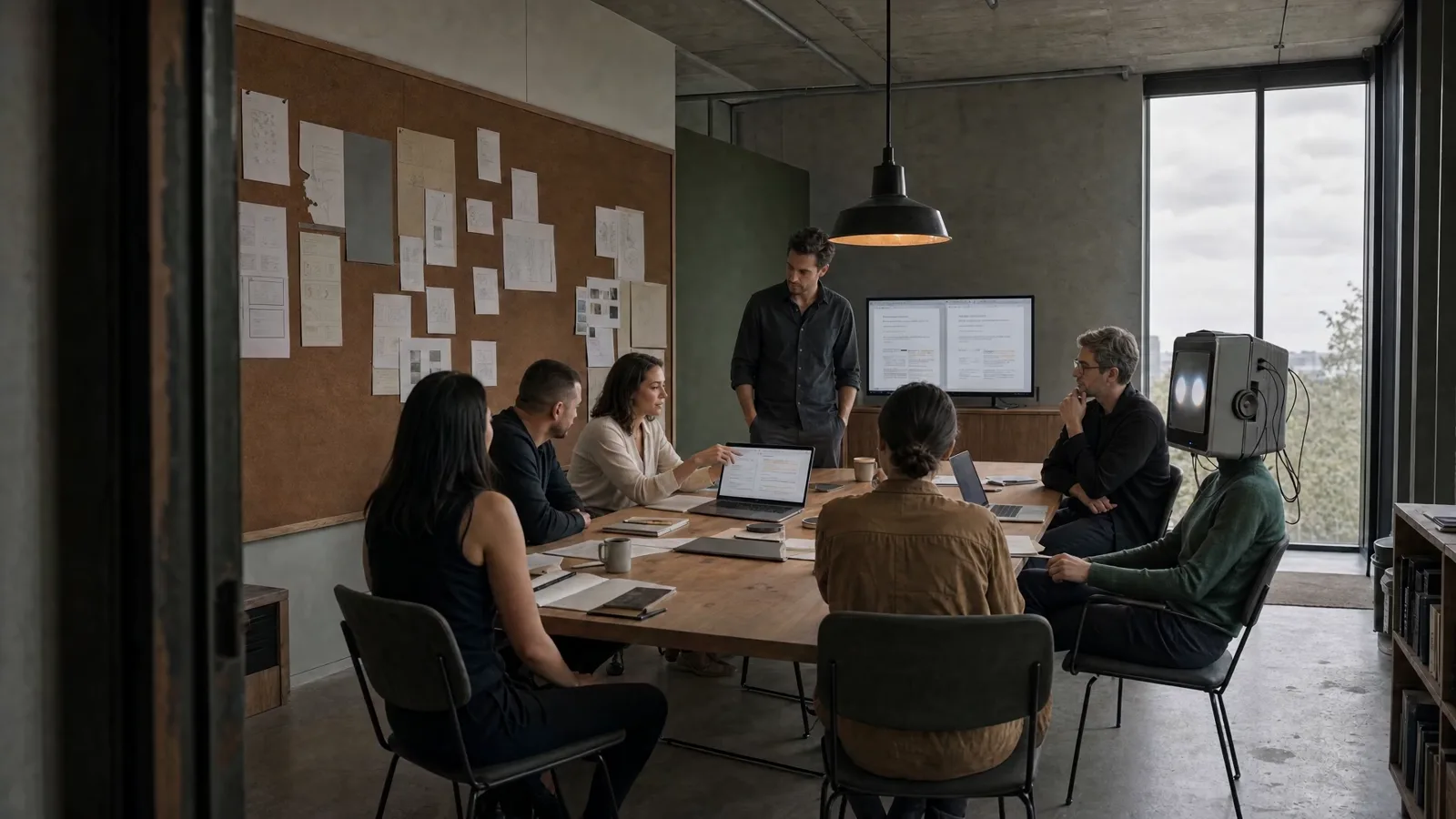
Department AI training is a programme that teaches a functional team to use AI within its own workflows and review responsibilities. Paloren designs role-based learning for marketing, sales, HR, finance, customer service and operations, with safe exercises and practice between sessions. The programme includes access preparation, a practical baseline, independent assessment and manager-supported follow-up. It suits small teams as well as enterprise departments. The scope distinguishes learning from process redesign, platform administration and production automation so each has an accountable owner.
01 / 04Department programmes
Build the programme around a department workflow
Department AI training connects learning to a sequence of work rather than an isolated prompt. Start by mapping what arrives, what the team produces and who checks or uses the result. A sales team might prepare an account brief, draft questions and record a reviewed follow-up. A service team might classify an enquiry, find approved guidance and draft a response. Those tasks need different evidence and approval rules. Paloren scopes the programme with a manager and representative learners so the exercises reflect ordinary work, including the exceptions. The output is a learning plan tied to responsibilities, not a generic course with a department name attached.
- Input-to-output workflow map
- Role-specific learning objectives
- Reviewer responsibilities and acceptance criteria
02 / 04Department programmes
Choose exercises that respect professional boundaries
Department exercises should be realistic without asking AI to make decisions it has not been authorised to make. Marketing can practise drafting from an approved claims sheet. Sales can prepare account questions from fictional records without inventing commercial promises. HR can turn a supplied policy into an employee explanation without assessing an individual's suitability for employment. Finance can write commentary about a checked sample table while calculations are verified independently. Customer service can draft a reply while refunds remain subject to approval. Operations can structure a handover without generating safety instructions. The exercise teaches both useful assistance and the boundary around the final decision.
- Marketing and sales: grounded drafts and reviewed commitments
- HR and finance: policy explanation and checked commentary
- Service and operations: escalation and handover practice
03 / 04Department programmes
Sequence sessions with manager-supported practice
A department programme begins with common foundations, then moves into role-specific work and an applied review. Between sessions, learners try one approved method on a bounded task and retain a sanitised example of the result. Managers protect time for practice and identify who can answer process questions. The facilitator uses that evidence to adjust the next session rather than repeating a fixed presentation. Prerequisites include approved tool access, suitable devices and an agreed source pack. If staff have mixed experience, baseline tasks help determine groups. If a workflow depends on unavailable data or permissions, the programme records that dependency instead of treating it as a skills failure.
- Foundation, role lab and applied review sessions
- Between-session task with manager feedback
- Access and process blockers recorded separately
04 / 04Department programmes
Set a shared standard for accepted work
Department training needs a shared review standard so good practice survives beyond the most enthusiastic user. Learners assess outputs for accuracy, completeness, tone, source support and any required approval. They compare an early attempt with a later independent task and explain why changes were made. The department then selects a small set of reusable instructions with an owner and review date. Follow-up examines whether colleagues can use them, whether reviewers receive better work and whether exceptions are handled consistently. Track correction effort alongside task time. A programme can improve working habits without producing a financial saving, and the report should keep those outcomes separate.
- Department assessment rubric
- Owned library of reviewed task instructions
- Follow-up on rework, use and unresolved exceptions
What you take forward
Not just a session. Something to work with.
Department workflow map
Role-specific agendas
Safe source packs
Practical assessment criteria
Reviewed instruction library
Manager follow-up brief
- 01
Map the handoff
Identify the task, its inputs, output and downstream reviewer.
- 02
Prepare role labs
Create fictional examples and confirm learner access and baseline needs.
- 03
Practise between sessions
Trial one method under ordinary review and collect sanitised feedback.
- 04
Agree a team standard
Review assessment results and assign ownership of reusable instructions.
Before we begin
Your questions.
Straight answers.
Can several departments join the same programme?
Yes, with a common foundation and separate role exercises where needed. Shared sessions are particularly useful for a handoff between departments. The programme should not force finance, sales and HR to accept the same examples or review criteria simply to keep everyone in one room.
Do we need a separate programme for every industry?
No. Many learning objectives follow the role and task rather than the industry label. Industry context matters when it changes terminology, permissible data or professional review. We adapt the exercises and review requirements to that context within the agreed programme.
How are managers involved?
Managers help choose the tasks, protect practice time and define accepted work. They also distinguish an access problem from a learning problem. Follow-up gives them evidence about completed exercises and remaining obstacles, not a league table of employees based on prompt counts or attendance.
What if the department has no approved AI tool?
Start with the approval and access question. A discussion-based literacy session can use supplied outputs, but individual hands-on practice requires an approved environment. We can document the learning requirements for IT and governance review without assuming permission to introduce a new application.
Your team. Your next chapter.