ChatGPT Training for Business Teams
Less starting from scratch. Less rewriting vague answers. We train your team to use ChatGPT for clearer drafts, useful analysis and repeatable work, with practical checks before the result goes further.

Less starting from scratch. Less rewriting vague answers. We train your team to use ChatGPT for clearer drafts, useful analysis and repeatable work, with practical checks before the result goes further.
Paloren trains business teams to brief ChatGPT with the right context and check the output before it goes further. Your team can get more from ChatGPT than a generic first draft.
We teach people how to brief it with the right context, turn supplied information into useful work and catch invented facts before a customer or colleague sees them. Sessions focus on tasks such as customer replies, meeting preparation, reports and internal communication.
Beginners learn a reliable starting method; existing users learn how to improve work that currently needs too much rewriting. We prepare safe exercises, give practical feedback and help the team build instructions they can reuse.
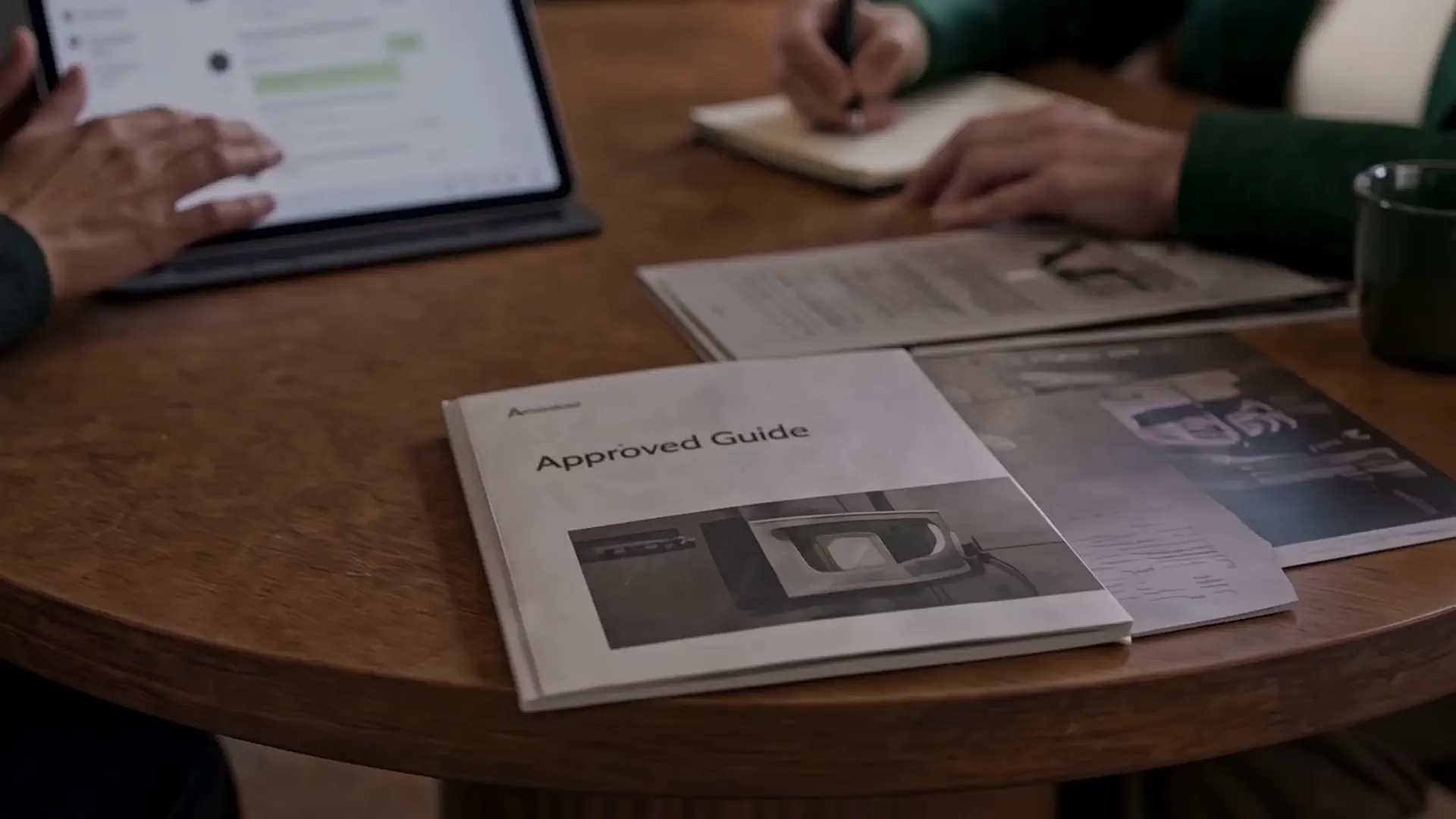
Paloren S4 MethodWe train non-technical teams to brief ChatGPT with audience, purpose and supplied facts before drafting. Sessions use a customer-reply exercise built from product sheets and service policy, with checks before anything leaves the room.
| Stage | What it changes |
|---|---|
| Signal | Collect the task brief, approved product sheet, shipping records and service policy the team currently works from, plus recurring vague requests. |
| Synthesis | Design briefs that separate drafting, analysis and fact checking; mark each statement as supplied fact, interpretation or unresolved question. |
| System | Run the customer-reply exercise: identify the invented timeline, unapproved refund claim and changed product, then rewrite using only supplied information. |
| Scale | Assign a reviewer to own the brief template and checks, price follow-up workshops, and extend the method to reports and policy explanations. |
A 12-person service team runs a half-day workshop. Signal captures their standard task brief and an approved product sheet. Synthesis adds checks distinguishing supplied facts from interpretation.
System tests a flawed customer reply that invents a two-day shipping promise and an unapproved refund; learners rewrite it using only shipping records and the service policy.
Scale tracks how many outgoing replies cite the brief, targeting eight of ten within a month while unresolved questions route to the team lead.
Written teaching example with hypothetical inputs, not a client result.
Operating metric: Share of outgoing replies citing the task brief and its checks.
What this can change for your team
Learners specify audience, purpose, supplied facts, boundaries and desired output before requesting a draft. In a worked example customer exercise, they compare a broad request with a brief grounded in an approved product sheet.
The reusable asset is the task brief and its checks, not clever phrases that work only once.
How we make this work
Training begins with the information a competent colleague would need. Learners specify audience, purpose, supplied facts, boundaries and desired output before requesting a draft.
In a worked example customer exercise, they compare a broad request with a brief grounded in an approved product sheet, then identify invented details, unnecessary claims and language that does not fit.
Revision becomes a deliberate instruction rather than a vague request to improve. The reusable asset is the task brief and its checks, not clever phrases that work only once.
Business teams who draft, summarise and analyse every day, from first-time users to staff whose ChatGPT output still needs heavy rewriting.
Learners review a flawed draft that changes the product, invents a timeline and claims an unapproved refund. They identify each unsupported statement and rewrite it using only the supplied information: shipping records, product specs and service policy.
Training is priced as a workshop: half-day from USD 4,500, full-day from USD 7,500, 6 to 16 people.
How we make this work
This exercise teaches what not to do before teaching what works. Learners review a flawed draft that changes the product, invents a timeline and claims an unapproved refund.
They identify each unsupported statement and rewrite it using only the supplied information: shipping records, product specs and service policy. The corrected version explains what can and cannot be confirmed, proposes the next step and leaves decisions with the appropriate person.
This method applies to any task where facts matter: customer communication, internal reports, policy explanation or decision briefing. Training is priced as a workshop: half-day from USD 4,500, full-day from USD 7,500, 6 to 16 people.
Worked exercise
This ChatGPT lesson practises briefing and revising a short customer draft in an approved chat environment. The same checking method can be used in other tools; it needs no connected inbox or sending permission.
Written teaching example, not a recorded product response or client result. Repeat with a new source pack for independent assessment.
A written draft needs source and tone checks. Commentary about a sample table needs reconciliation with checked figures. A research-style answer needs inspectable sources, not merely a confident explanation.
Learners mark statements as supplied facts, interpretations or unresolved questions.
How we make this work
We treat different outputs as different review problems. A written draft needs source and tone checks. Commentary about a sample table needs reconciliation with checked figures and clear treatment of missing data.
A research-style answer needs inspectable sources, not merely a confident explanation. Learners mark statements as supplied facts, interpretations or unresolved questions.
Where the approved environment supports additional functions, we agree which belong in the exercise beforehand. The course does not assume every account has the same tools; an exercise remains useful when the team can explain how it checked the result and where uncertainty remains.
Your team needs a working account approved for the exercises, a suitable device and an organiser who can resolve access questions. The agenda moves from a baseline drafting task to instruction design, source checking, guided revision and an independent assessment.
Worked examples are the default; sanitised company material is used only after your approval.
How we make this work
The session needs a working account approved for the exercises, a suitable device and an organiser who can resolve access questions. No coding experience is required. The agenda moves from a baseline drafting task to instruction design, source checking, guided revision and an independent assessment.
A full day can add a second workflow and peer review. Worked examples are the default; sanitised company material is used only after approval. Before the session, we check account access, sharing settings and available functions so you start with a working environment, not a login problem.
A reusable workflow records what the task is for, which source material is needed and who accepts the result. Learners prepare a short instruction template and test it on a different example.
We assign an owner to update instructions when policies or sources change. Follow-up reviews a small workplace trial, including correction time and rejected outputs.
How we make this work
A reusable workflow records what the task is for, which source material is needed and who accepts the result. Learners prepare a short instruction template and test it on a different example to see where it fails.
If the approved environment offers a reusable assistant format, that can be included; it is not required to learn the method. We assign an owner to update instructions when policies or sources change.
Follow-up reviews a small workplace trial, including correction time and rejected outputs. Connecting the workflow to business systems or letting it send messages remains a separate implementation decision.
Tell Paloren what your team uses ChatGPT for. We will send a training proposal within two business days and reply within one business day.
Get more from ChatGPTSelect a recurring communication or analysis task with a known reviewer.
Confirm approved access and worked examples or authorised materials.
Compare briefs, inspect errors and complete an independent task.
Review a workplace example and update the task instructions.
Yes. Existing users start with a 20-minute baseline exercise that shows how they brief and check today. The rest of the half-day (3.5 hours) targets inconsistent outputs, source discipline and reuse rather than where the buttons are.
Yes, when your organisation allows shared GPTs. We confirm that with your administrator 5 business days before. If shared assistants are not permitted, learners leave with a documented task template instead, which does most of the same job without the admin approval.
For a team session you need accounts that keep your data out of model training and that an admin can manage; in practice that means a business or team plan rather than personal accounts.
We do not resell licences. Confirm the plan with your administrator at least 2 weeks before the session.
No. The workshop (3.5 hours or 6.5 hours) teaches drafting and checking; nothing is sent automatically. Connecting ChatGPT to your inbox or CRM is an implementation project, typically USD 15k to 60k, with its own testing and approvals.
Training is priced as a workshop: half-day from USD 4,500, full-day from USD 7,500, for 6 to 16 people. We do not resell licences; your team needs accounts approved for the exercises.
An implementation project is scoped separately with its own testing and approvals.

Still rewriting everything ChatGPT gives you?
Get more from ChatGPT